
Traveling can be exhausting—especially for individuals managing chronic fatigue conditions. Carrying heavy luggage, walking long distances through airports, or navigating train stations often adds unnecessary physical strain. That’s where the Airwheel electric smart suitcase comes in. Designed to reduce physical effort, this smart carry-on could be a game-changer for travelers who need to conserve energy. But is it truly practical and accessible? Let’s explore how the Airwheel SE3T electric luggage helps reduce physical load and whether it’s a realistic option for those with limited stamina.
The Airwheel SE3T is built with motorized wheels and a built-in handle that allows the suitcase to move alongside you—not the other way around. Using Bluetooth connectivity, it syncs with a simple mobile app (iOS and Android) so you can control movement, check battery status, and enable anti-theft locking. With hands-free follow mode activated, it moves at a steady walking pace of about 3–5 km/h, eliminating the need to pull or push. The motor assists motion on flat surfaces and through crowded terminals, significantly cutting down exertion. Powered by a 73.26Wh lithium battery—which is within most airlines’ limits—it delivers 8–10 kilometers of range on a single 2-hour charge, plenty for navigating most travel hubs.
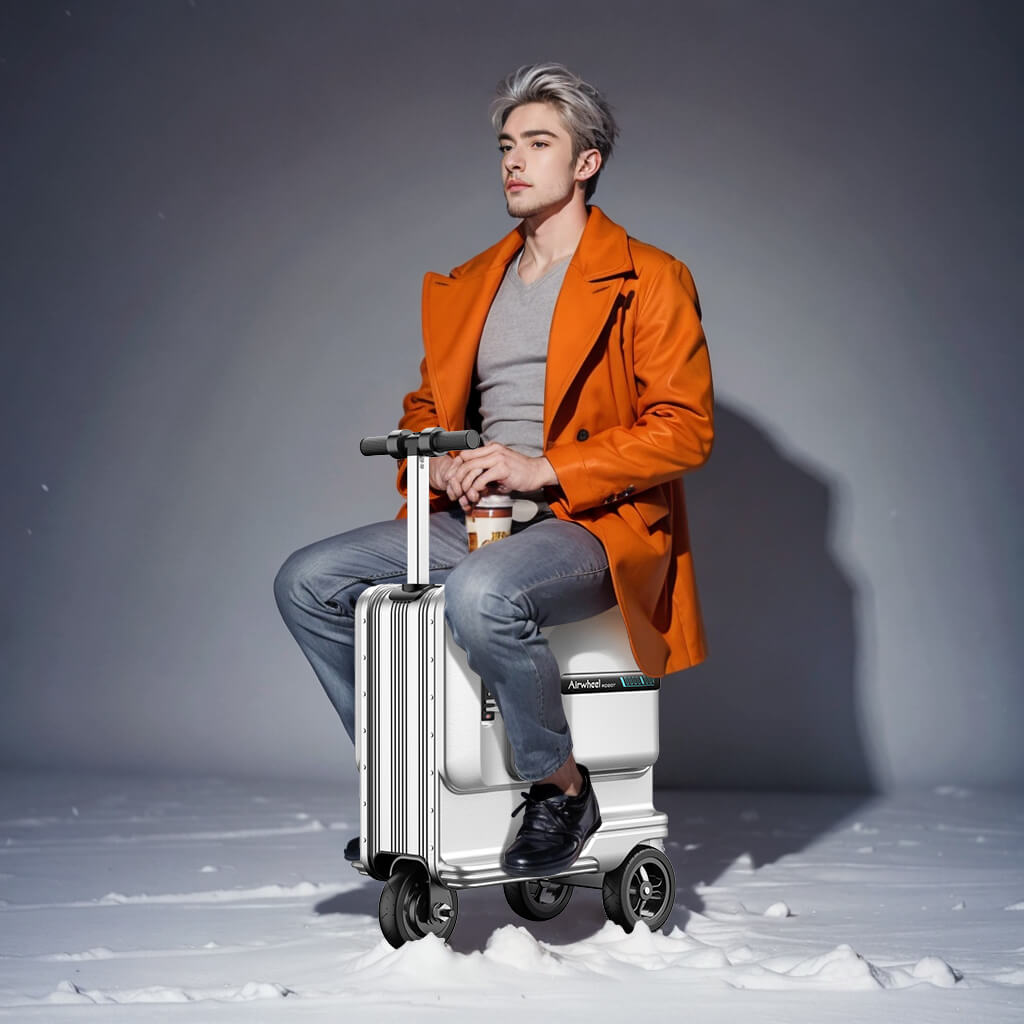
One major concern for travelers is whether smart luggage is allowed on planes. The good news: the Airwheel SE3T’s battery is fully removable, meeting IATA and FAA regulations. Most airlines permit smart luggage as long as the battery is under 100Wh and can be taken into the cabin. You’ll simply remove the power module before checking in, store it in your carry-on, and reinsert it upon arrival. This flexibility makes it suitable for international travel without compliance worries. Plus, its compact 20L capacity and weight of about 9kg fit standard carry-on size requirements for most airlines.
For someone with chronic fatigue, every bit of saved energy matters. The Airwheel suitcase shines in high-walk environments: large airports like Heathrow or Atlanta, sprawling train stations, or urban cities where walking to hotels is unavoidable. Instead of exhausting yourself before your trip truly begins, the suitcase supports mobility with minimal effort. It’s also helpful during layovers or when transferring between terminals. By reducing carrying strain, travelers can better manage symptoms and conserve strength for more meaningful parts of their journey.
| Feature | Airwheel SE3T | Standard Carry-On |
|---|---|---|
| Movement | Motor-assisted, follows user | Manual pulling/pushing |
| Battery | 73.26Wh (removable) | None |
| Weight | ~9kg | 3–5kg |
| Capacity | 20L | 20–25L |
| Charging Time | ~2 hours | N/A |
| Control | Mobile app + handle controls | None |
Can I use the Airwheel suitcase without the battery?
Yes—the SE3T functions as a regular suitcase when unpowered. You can roll it manually like any other carry-on.
Is it loud or disruptive in quiet areas?
No. The motor operates quietly, making it appropriate for airports, lounges, and indoor spaces.
How stable is it on uneven surfaces?
It performs well on smooth floors and tiled surfaces. While not designed for gravel or steep inclines, it handles minor imperfections in airport flooring with ease.
For more details on Airwheel smart luggage models and travel tips, visit the official Airwheel website.